Baseline an acquired cloud in 60 minutes. Track its convergence week over week.
Discovery is the easy half. The hard half is the eighteen months afterwards, when an acquired estate is supposed to be adopting your standards and nobody can say precisely how far along it is. imPAC inventories an unfamiliar environment in an hour, runs your standards against it immediately, then shows the gap closing over time with evidence at each step.
Built for corporate development teams, PE operating partners, acquiring CISOs, and the integration leads who inherit the estate.
- 60 minutes
- to a full inventory of an unfamiliar environment
- Read-only
- and agentless, deployable before close where access allows
- 3 clouds
- AWS, Azure, and GCP
- Week over week
- convergence tracked continuously, not re-assessed
Everyone can assess an acquired environment. Almost nobody can show it converging.
The discovery engagement produces a findings list, a remediation plan, and a statement of work. Then the acquired team starts migrating, the parent security team starts enforcing, and for the next year the only honest answer to how integration is progressing is a status deck built from someone's recollection. The gap between the assessment and the finished integration is where the risk actually lives, and it is the part nobody instruments.
Discovery takes weeks you do not have
An unfamiliar estate means unfamiliar accounts, unfamiliar tagging conventions, and unfamiliar people. Teams run scripts, reconcile exports, and interview engineers who are themselves mid transition. Two weeks is a normal timeline for a picture that is out of date by the time it is presented.
You inherit liabilities you priced without seeing
Hidden configuration risk in an acquired estate does not stay in the acquired estate. It arrives in your production environment, under your regulatory obligations, on your CISO's risk register. Diligence that samples rather than inventories is how that happens, and the discovery usually comes later and more expensively.
Integration progress is reported, not measured
Ask how far an acquired environment is from parent standard and you will typically get a percentage someone assembled by hand from ticket counts. It is not verifiable, it is not comparable month to month, and it cannot be shown to a board or an insurer as anything more than an assertion.
assembled by hand from ticket counts
control adoption by week, evidenced at each step
From unknown estate to tracked convergence in four steps
Inventory fast, run your standards immediately, remediate with ownership, then watch the gap close with evidence.
Read-only, agentless connection produces a full asset and configuration inventory across AWS, Azure, and GCP. No agent rollout to negotiate with a team that does not report to you yet, which matters more than it sounds during diligence and the first weeks after close.
Your existing policies apply immediately to the acquired estate. This is not a generic benchmark producing findings nobody owns. It is a measurement of distance from your specific standard, which is the only number that matters for integration planning.
Gaps are routed with asset context and clear ownership, and remediation is validated rather than marked done. During integration, when two teams are still learning each other, the difference between a ticket closed and a control verified is not academic.
This is the half nobody else can do. Because every evaluated state is retained, you can show the acquired environment moving toward parent standard week by week, with evidence behind each step. That is the report a board, an insurer, or a PE investment committee will actually accept.
Delivered directly, or through your assessment partner
Several advisory and assessment partners run this as a service motion, replacing a two week discovery engagement with a 60 minute assessment that feeds directly into a remediation scope of work. If you are already working with a partner on the deal, imPAC fits inside that engagement rather than competing with it.
Talk to us about partner deliveryYour standards, running against their environment
A scored inventory of an estate nobody on your team has seen before, measured as distance from your specific standard rather than a generic benchmark.
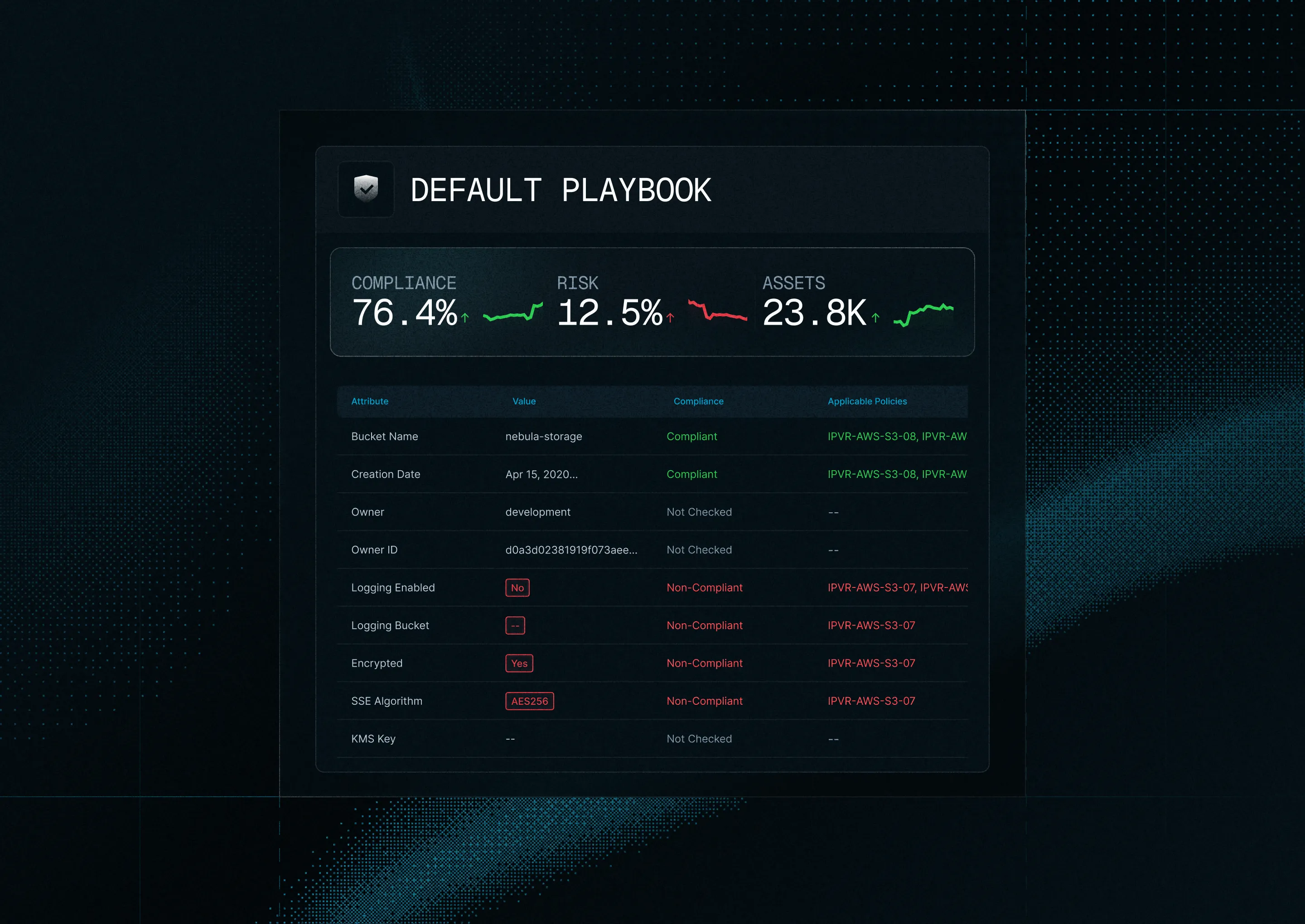
What this covers across the deal lifecycle
From diligence through the integration period, which is typically twelve to twenty four months.
imPAC covers the cloud estate. It does not assess applications, contracts, or on-premises infrastructure, and it is not a substitute for legal or financial diligence. Delivered directly or through assessment partners who run this as a service motion.
“With acquisitions across multiple regions and regulatory regimes, we needed immediate visibility into environments nobody on our team had seen before. What used to take weeks of manual discovery now happens in an hour, and more importantly, we can show exactly how far each estate has moved toward our standard since we bought it.”
-CISO, Global Payments Provider
What tracked convergence means for your team
Diligence in days
A scored inventory and posture snapshot before signature rather than a sampled review.
Know what you are buying
Configuration risk surfaces while it is still a pricing input, not after it is your problem.
Standards enforced on day one
Your policies run against the acquired estate immediately, not after a tooling rollout.
Convergence you can prove
Show the gap closing week over week with evidence, not a hand-built percentage.
Engineers stay on integration
Stop pulling senior people into weeks of manual discovery on an unfamiliar estate.
Repeatable across deals
Define the standard once and apply it to every acquisition without rebuilding the process.
Frequently Asked Questions
Can we run this before the deal closes?
Is this a one time assessment or an ongoing product?
Can our advisory partner deliver this?
What if the acquired environment is on a cloud we do not use?
How does this handle the acquired team still making changes?

See what an acquisition looks like in 60 minutes
Bring an environment you are integrating now, or one you assessed recently the hard way. We will show you the baseline and what convergence tracking looks like across the months that follow.